Feeds:
Posts
Comments
Chateau de Chenonceau Kitchen Stove

Not my kitchen. Chateau de Chenonceau, France. Via Wikimedia Commons.

It wasn’t that hard, as it turns out. And the child gave me the entry point herself.

It usually occurs to 8-year old K to ask, as she somewhat grudgingly sets the table, what we are having for dinner. A few weeks ago, when she insufficiently masked her dismay, I put down the pot in my hand and looked squarely at her.

Me: I have an idea.
Her, rolling her eyes: Oh no.
Me: No, no. It’s a good one. I promise.
Her, scrunching her eyebrows: Yeeesss?
Me: How about, when you are nine, you can be in charge of dinner once a week. You pick the menu, you be the chef.
Her: Yes! (Jumps up and down.) Do we have to wait until I am nine? That’s still two months away!
Me: No. You can start now if you want. Next week. What are you going to make?

Thus was born a new experiment. I have to confess that I’ve been waiting for this moment for a while now. Last year, Leslie Kaufman wrote a piece in the New York Times on this subject. Her sons were 10 and 14 at the time. I read it and started dreaming (it’s ok, I know it’s a dream, I don’t expect it to come true) of sitting on the couch with a book and a glass of wine while K makes us a simple but healthy and appetizing meal. The reality, of course, is much different. Especially with a child who is still quite young, and with her three-year old sister in the mix. Quite literally. The scene is a bit more like the one Sean Wilsey describes in his hilarious piece, also in the New York Times, in 2011. We might even end up with more items, and people, to wash at the end. In my case, I’m also trying to relinquish responsibility and transfer it to the mature and responsible 8-year old, while attempting to tame a wild toddler we refer to as “the creature.”

We’ve set a few ground rules:

  1. Each menu must include at least one form of protein, one starch, and one vegetable. (Later on we may include dessert. We are all big fans of dessert here.)
  2. She is responsible for making sure we have the necessary ingredients in the house in time. For the moment, this means reminding me in advance to pick up the items we need, and when possible, accompanying me to buy them.
  3. I must be present (for the moment) in the kitchen, and I must be watching when she does anything involving the stove/oven or knives.

She has crossed that invisible barrier, the one that stands between “help” that is in fact totally counter-productive (involving more of my time and patience, creating more work for me, and making a greater mess) and help that is truly helpful in advancing the cause of the meal. Her sister, however, is squarely on the first side, capable of creating a mess of unfathomable proportions in the time it takes me to turn on a pot to boil. When I nearly slipped and broke my back due to a fine layer of flour on the hardwood floor the other day, my husband reminded me: this is a long term investment. Meanwhile, he is steering clear of the whole situation, although wise enough to praise the results with vigor and engage K in a discussion of her techniques and the finer points of being Head Chef. Plus he’s also cultivated her interest in barbecue to the point that she looks forward to watching BBQ Pitmasters competitions and talks about the time when the two of them will enter as competitors.

I’m trying not to place too much weight on this experiment. Sure, it might end up being a wonderful mother-daughter(s) bonding moment (like when we’re both bonded to the floor by the honey her sister spilled), but for the moment K is talkative enough, and I am available enough to her, that there are other opportunities for such bonding. It might end up fostering in her a greater interest in nutrition and health and the environment and such, but she’s already fairly attuned to these. Mostly, I view it from a practical perspective: it’s good to be independent, to know how to manage, to go forth in the world as prepared as one can be. The French have a good word for this: to be “débrouillarde.”

The first menu consisted of spaghetti with “meat sauce” (i.e. a simplified bolognese) accompanied by broccoli sautéed with garlic and olive oil. A relatively involved project to begin with, as we made the sauce from scratch. But K was game. She had a friend over that afternoon, and at 4:00 pm I called them both down to the kitchen.

K: Let’s go! I have to make dinner.
Me: You’re welcome to hang out and help.
Friend: Why are you starting now? It’s only 4.
Me (thinking Aha! Teachable moment. Lesson 1.) Well, it’s one thing to make dinner, it’s another to get it all done by dinner time. One has to plan. For example, the sauce takes a while to simmer, and we have the added variable of S. A 3-year old can be very disruptive in the kitchen. We have to allow extra time. You can’t just wait until you are hungry to start thinking about dinner.
Friend: Oh? That’s what my mom does.

That first afternoon, there were many introductory lessons: how to turn a burner on and off, and to control the flame. (K already knew, apparently, to keep the handle of the pot or pan turned away from the edge.) The importance of keeping track of what utensils and surfaces have been in contact with raw meat. How to delegate tasks whose outcomes are irrelevant to the progress of the prep to the little sister while still making her think she’s being helpful. That type of thing.

There came a time when every utensil and container in the kitchen was dirty, when the sauce was burbling up out of the pot in explosive spurts, when K was sprawled on the floor moaning, and when S was rummaging untended in the fridge like a bear cub. But the experiment was a success for these three simple reasons:

  1. Dinner was on the table at something that approximated dinner time, and was quite tasty to boot.
  2. We’d had a few good laughs.
  3. Most importantly, K wanted to cook again.

Which she did last night: steaks (rib eye, broiled, first rubbed with garlic and fresh herbs), corn on the cob, and sesame semolina bread with an array of French cheeses. This time, our commune neighbor 8 year old L joined in, eager to help out. Lots of small fingers to pull the leaves off the thyme stems. He suggested they keep track of the recipes, create a book, and publish it. My kind of boy! I don’t see that really happening, but so far I’m quite pleased with this experiment.


Writer on beach.

Writer on beach. Photo by Joe Mabel, via Wikimedia Commons

One bottle of Greylock gin
Limes & tonic
What If? (Book of writing prompts by Pamela Painter and Anne Bernays)
Beach/running shoes
Manuscript in progress
Sunscreen
Kindle
iPod dock
Tea & coffee
Chocolate

With the exception of the manuscript in progress, this could be a good gift list. But that’s not actually what this is. Instead, it is the start of the packing list for a writing retreat I am planning with three other women–writing partners with whom, over five years of regular meetings, I have forged strong friendships. The prospect of this weekend is making me giddy with excitement. One member has access to a house by the beach in Maine. We have planned several solid chunks of writing time, small excursions on the coast, good meals out, and time to review our work together. I dream of taking a notebook down to the beach, of sketching out the next few scenes of my new book. But, as must be the case, this excitement is countered by the grinding of wheels in my brain which must immediately roll into action to plan the logistics of coverage in my absence: school and preschool drop off and pickup, management of Little One while Big One is at martial arts with her father, teaching coverage for my dance students, etc. I–and those around me–will make it happen, I know we will, and so I let my excitement carry me forward. But it is a constant juggle.

People keep asking me what I’d like for my upcoming birthday, which some view as a significant one for reasons that seem to be rather arbitrary, and the answer is this: time. That’s all I want. And I’m willing to wager that time is all any writer really wants. I don’t need more stuff cluttering my life. But please, take my fabulous children and allow me a day of writing, a day of reading, a day of letting my mind go free, of planning only according to what I want and not around what others want or need or expect.

This, I think, will resonate with any parent, especially primary care-giving parent, trying to carve out time for a creative pursuit. If you know one, the most wonderful thing you can do for him or her is to offer your services to help free up some time. It will cost you very little–assuming their children are not tyrants–and will earn you some serious gratitude and good karma.


Kanazawa street at sunset

Kanazawa street at sunset

(All photos by my husband. My hands were busy pushing a stroller.)

I returned recently from two weeks in Tokyo, Takayama, Kanazawa and Kyoto. The trip was sublime, even with a not-quite-three year old in tow. It is an experience that is remaining with me, impressions and images vivid in my mind even as I have been fully sucked back into the whirlwind and mundane aspects of regular life. And I can tell these will stay with me for a long time, with my self as an observer of the world, as a student of an art form, as a parent and as a writer.

Three things resonated with me the most, the first of which was the attention to detail, the thought put into the smallest of things. Everywhere were umbrellas available for borrowing, and bins for drippy ones post use. All restaurants we frequented, no matter how un-childish, immediately set out plastic utensils and bowls for the little one. All toilet seats were pre-warmed. (Well, that’s a whole other topic–the intricacies of the toilets or “washlets” and the many functions they can perform.) Every room we stayed in was equipped with a Zojirushi hot water maker, ready on demand with water for tea (with different settings for green and black). There is a focus on service, even outside the service industry. People came up to us to offer help, to give up their subway seats for the children. And I could wax rapturous about the ekiben, the bento box lunches made and sold specifically for train trips.

All this spoke to me of a people aware of their surroundings. A week after our return, I sat at the Muse & the Marketplace writing conference in Boston listening to acclaimed literary critic James Wood give a keynote talk in which he focused on the notion of the writer’s ability and mandate to “seriously notice” the world around her, and I thought about how much more the Japanese seem to seriously notice their surroundings, and care about them, than Americans overall. (Pardon the generalization, but I trust you understand what I mean.)

Takayama cherry blossoms

Takayama cherry blossoms

Which leads me to the second strongest impression I had in Japan: aesthetics reign. The emphasis on presentation–of spaces, of food, of nature, of objects, of oneself–and the importance of doing things right and getting to their essence was a delight. And I realized how much I value this. I may never have articulated as much to myself, but I understand now that a focus on aesthetics is something I have always appreciated, for better or for worse. From the way I used to set the table in my childhood home, folding the napkins into fans and arranging the tomatoes and cucumbers into designs on the lettuce, to the way I fear sharing some of my writing, even before writing it, because it won’t be sufficiently well-crafted. Sometimes I wonder in frustration why one should bother to make an extra effort, but now, having been to Japan, I see how such an effort, on a larger scale, can be transformative. The small, ten foot square gardens in front of the most modest of homes, with their thoughtfully arranged stones and moss and maple tree, are delightful enough, but then look at the Kenroku-en garden in Kanazawa, and how everywhere the eye turns it is met with magnificent compositions, and one is almost overwhelmed by the magical aesthetics of it all.

Kenroku-en garden in Kanazawa

Kenroku-en garden in Kanazawa

The timing of this trip, along with these realizations, has segued most serendipitously into an exercise: crafting a writer’s mission statement. With a juggle of responsibilities and minimal time to write–the plight of most writers–I want to ensure that I deploy my resources on those activities that will get me closer to what I truly want to achieve as a writer, and that necessitates, unfortunately, that I figure it out and articulate that goal to myself. (Admittedly, this provides a good opportunity to put off actual work on one’s manuscript, under the guise of an otherwise productive and useful endeavor.) As soon as I was over the incapacitating jet lag of our trip, I sat down to think about what really drives me to write fiction, and adhering to a strong sense of aesthetics figures strongly there. The Kenroku-en garden is like an ideal to strive for, a magical place that engages the senses, where the sum of individual and carefully crafted parts adds up to a wholly immersive experience.

Garden at Denpo-in, Tokyo

Garden at Denpo-in, Tokyo

With current writing projects focused on India, people in unique societal positions, history and art, this third aspect of Japan grabbed at me and won’t let go: the very aliveness of and respect for history and tradition without any compromise to the advances of modernity. In the midst of high rises and neon (arguably not really advances) will be nestled a gorgeous shrine, set about with lovingly shaped trees, swinging lanterns, and incense sticks whose spirals of blue smoke are a testament to the attentions of living souls. In the bustling streets, in front of a convenience store, will be a trio of kimono-clad women going about their business of simply living. In the traditional townhouse, or machiya, that we rented in Kyoto, stunning in its simplicity, was a wooden soaking tub, a mainstay of Japanese cleansing rituals.

Kimonos in Kanazawa

Kimonos in Kanazawa

Kyoto machiya

Soaking tub, Kyoto 

Kyoto machiya

Last night, as I was singing to the little one before bed and after her own bath, I overheard a conversation between eight year old K and her father. After the usual prodding, K was going through the routine of cleaning up her belongings in the common areas–sweater flung across the armchair, sneakers tossed in the general direction of the closet, Scotch tape and paper scraps from her craft project involving a stuffed baby kangaroo on the counter–before retiring to her lair, I mean, bedroom.

K: Why do I always have to go around cleaning up every single little thing?
Father: Remember when we were in Japan, and things were so neat and simple and organized, and how much we all enjoyed that?
K: Yeah. (Her intonation rises, implying the unsaid: What’s your point?)
Father: Well, wouldn’t it be nice to bring a little bit of that into our own home?
K: But we’re in America!

I wonder if she meant that as in “We’re not in Japan” or whether it was more of an observation about America itself. Regardless, isn’t that why we travel? To experience and assimilate new ideas, new aesthetics, new perspectives? What experiences in other locales have had a long-lasting impact on your life or work?

Shirakawago

Shirakawago


#Muse2013 poster

This coming weekend is one of my favorites of the year: the weekend of the Muse and the Marketplace writing conference in Boston. Among the best in the country in caliber and professionalism, it attracts writers, editors, agents, PR specialists and many others connected to the craft and business of writing. (#Muse2013 for those of you active in social media.) After six years of attending this conference religiously–holding the weekend sacred and putting aside all other responsibilities of parenthood, teaching and freelancing–I have a few tips for anyone attending this, or any other, writing conference.

Wear something interesting. The dress code is casual but professional. No jeans, cut-offs, etc. But within that, be creative! You want to stand out, be noticed in a positive way. Everyone will be meeting hundreds of people. Don’t you want to be easily remembered? Keep your clothing appropriate, of course, but don’t be afraid to accessorize, or wear something that helps spark conversation. Even better if it relates to the type of writing you do. My historical novel is set in India, and I own some salwar kameez, the loose pants and tunic outfits that many women in India wear. Aside from the fact that they are remarkably comfortable, these colorful outfits invariably stand out from the sea of slacks and jackets, and often attract comments, which then naturally segue into a conversation about my writing.

Dress in layers. Writing conferences, like many types of conferences, often take place in large hotels. There are invariably fluctuations in the HVAC system that are beyond the control of conference organizers. One year, there was an Arctic gale blowing through some of the session rooms. Another year, some floors of the hotel were sweltering and oppressive. Dress in layers that can be removed or added as necessary.

Bring plenty of business cards. Like 30 or so for each day of the conference. These can be your “regular” business card that relates to your other, non-writerly (gasp!) life, if you have one, or cards made specifically for your writer avatar. (I use Zazzle.com for the latter.) Either way, have plenty on hand, and make sure that the information is up to date, and contains the URL of your web site or blog if you have one. Then, don’t be shy about handing out your card, although always do so in a respectful and understated manner.

Keep a pen on hand. Even if you are planning to take notes on a laptop or other electronic device, keep a pen handy, if only to jot down, on the back of each business card you receive, a few key words about the person whose card it is. After 2-3 days of conference-going, you will be glad for the reminder of who was who.

Follow up with the people you meet. Wait a day or two for people to travel back home and unwind from the conference, and then drop them a note to tell them how you enjoyed meeting them. Include some kind of reminder of who you are–a reference to your conversation, or something that will jog their memory.

Engage with fellow writers, not just editors and agents. Even if you are on a quest to snag an agent or land a book deal, do not neglect the vast and supportive and resource-full community of writers around you. Other writers are your allies, your support network, your source of encouragement, your creative sounding boards. I met every member of my writing group through Grub Street, and have made many additional friendships through the Muse.

When engaging with editors or agents, be mindful of their schedules. At these conferences, agents and editors have responsibilities beyond simply being at the conference. They may be leading sessions, or participating in manuscript consultations, and their free-to-mill-about time might not always coincide with that of writers. If you spot your dream agent at the bathroom sink two minutes before the start of a session, that is not the time to launch into your pitch, even if you’ve honed it down to a dazzling 30 seconds. Smile, perhaps make some remark that is appropriate or might make the agent laugh, and wait for another chance, when he or she will then notice and remember you for being someone likeable.

Do plenty of research in advance. Look up the bios and web sites of presenters and others before the conference (and bear in mind that this takes a good bit of time). I use an old-fashioned method of index cards, jotting down some key facts about the people I would like to speak with if I get a chance, and keeping the cards on me at the conference.

Begin conversations with topics other than your book. If you are in the lunch line behind an editor you’d like to connect with, begin a conversation about something from that person’s bio, or something relating to the conference, or even relating to the food. If you are engaging and pleasant, conversation will naturally lead to your writing. And if it doesn’t, you can then actively steer it that way, in an artful manner, of course.

If you have a web site or blog, make sure it is updated. People you meet with invariably look you up online. Everyone can be forgiven, of course, for having a somewhat outdated site, but it definitely makes you look more interesting and on top of things if your last post is not three months old.

Sit toward the front. I have never understood why people will shell out hundreds of dollars to attend writing conferences and get the chance to learn from and speak with accomplished authors, editors and agents, and then sit in the way back of the room. Go ahead and sit up front. I tend to favor the second row. The first can be a bit awkward, and there is nothing in front of you to hide your feet if you need to slip off your uncomfortable shoe for a minute (although–why are you wearing uncomfortable shoes?) or hide your phone if you need to check it to make sure there is not word from your sitter about a crisis at home. But in the second row, you are close enough to be seen by the speaker and make eye contact, and you can be among the first to go up to him or her to speak in person.

Reach out to people who look lost or shy. Attending a conference with 700 other people can be overwhelming, especially for some writers who are used to their solitary pursuit and may be singularly introverted. You can make a big difference in someone’s experience, and create a lasting impression, just by inviting him or her to join your lunch table, or simply smiling and being approachable. And you may end up making a connection that is meaningful for you as well.

Practice your elevator pitch. It is essential that you be able to summarize your writing, especially book-length writing, in a succinct and engaging 2-3 sentences. You will be asked many, many times a variation on “So, tell me about your writing” and you need to be ready with a 30 second reply. Memorize it, and then practice how to say it without it sounding memorized. Perhaps have a couple of different versions, so you have multiple ideas in your mind, and you will be less likely to freeze if you forget a specific word. I worked on a book for ten years and still worry that I’ll sound like a bumbling idiot and won’t be able to tell an editor what it is about.

Did I miss anything crucial? Please chime in!


Tarte Tatin. Photo courtesy of the blog of Christine Pae.

Tarte Tatin. Photo courtesy of the blog of Christine Pae.

Look, there’s no big secret to a successful Tarte Tatin, the traditional French apple tart baked with the crust on top, and then flipped over to serve. I don’t know why people think there is. Or perhaps, there is a secret, and I’m about to reveal it to you. Ready? Here it is: don’t try too hard. Don’t complicate things. I’ve often heard people bemoan their inability to make a good crust, thinking it’s harder than it is. And, believing they can’t make a good crust, they just give up, and deprive themselves of this heavenly dessert, looking at me as though I were a wizard for being able to conjure one up in my kitchen. Or if they can manage the crust, they then worry about caramelizing the bottom (which becomes the top) of the tart.

I say this: Skip the caramel top. Instead, make a simple brandied caramel sauce to drizzle on afterwards. Then, all you need is a good crust and 6-7 non-mealy, somewhat tart apples.

Here is how to make a crumbly, buttery, delicious crust:

In the bowl of a food processor, put:

1 ¼ cup flour, a pinch of salt and 1/3 cup cold butter, cut into pieces.

Process for a few seconds until the mixture is the consistency of rough sand.

(If you don’t have a food processor, just use a regular, large bowl, and two butter knives to cut the butter into the flour. This is not a big deal. I grew up doing it this way, and it really doesn’t take long. Plus it’s kind of satisfying to criss-cross the knives through the mixture, going after the larger butter clumps until the consistency is right.)

Now add three tablespoons of ice cold water, and process/mix again.

That’s it. Knead the mixture together into a ball, and flatten slightly with your palm. Wrap in Saran wrap and place in fridge for a half hour.

While the crust is chilling, peel and slice about 6-7 apples. I like to use half Granny Smiths, half some other kind like Fuji, Pink Lady, Macintosh, etc. Avoid Red Delicious or Golden Delicious. If you have an 8 year old helping you with measurements, and a two year old puttering around with bowls of flour and sugar and generally making a mess on the floor, you can feed them some of the peels. (Yes, in some respects, these smallish creatures bear a striking resemblance to piglets.) Place the slices in a large bowl and sprinkle with sugar (I use about 2 tbsp, but you can use more for a sweeter experience) and cinnamon (about half as much as the amount of sugar you put). Squeeze half a lemon into the bowl, and toss.

Take out a pie dish and butter it generously. Lay out the apples in it, in several layers. You may want to make the first layer into a pretty pattern, as that will end up being the top of the tart. The pie dish should be very full, a bit higher than the edges of the dish, as the apples will soften and fall in on each other. Put a few (4-5) small pats of butter on top of the apples.

Take out the crust and roll it out on a piece of wax paper. If necessary, dust your rolling pin with flour. The crust will be crumbly, so roll it slowly, taking the time to re-stick any bits that threaten to separate from the main piece. When it is big enough, flip it onto the pie dish. Tuck in any overhanging bits. With a fork, poke a few sets of holes in the crust, to let the steam out.

That’s it. Place in a preheated oven at 350 degrees (Fahrenheit) and bake for about 45 minutes, maybe a bit more, until the edges of the crust start to turn golden. You might want to place a piece of foil below the pie dish, in case apple juices burble out.

When the pie is done, remove from the oven, and let sit for a good hour or so. Then, place a plate over it, and flip the dish over, so that the tart ends up crust down on the plate. You might need to coax some of the apples down from the pie dish with a knife.

I tend to leave it at that, and serve warm with two things: crème fraîche (which is NOT the same as sour cream) and the brandied caramel sauce.

Voilà. Bon appétit. It’s not apple season in most parts of the world now, but apples are widely available, and this is a dessert that is always a hit.

An original manuscript page from J.G. Ballard's CRASH, found at http://www.fountainpennetwork.com/forum/index.php?/topic/164727-j-g-ballards-pen/

An original manuscript page from J.G. Ballard’s CRASH, found at http://www.fountainpennetwork.com/forum/index.php?/topic/164727-j-g-ballards-pen/

There is true magic to be found in good editing. If you are a writer hesitating in the least about spending money on an editor, I say this to you: Do what you can, and spend what you can afford, for the best possible one. It’s the single greatest thing you can do for your work.

In order to get my manuscript in as tip top shape as possible, I conducted some extensive research and found a gifted editor who also turns out to be a gem of a human being. His name is Steven Bauer, and you can find him here. I may have worked and reworked my manuscript for years, all the while receiving valuable feedback from critique partners and writing teachers and agents, but nothing has come close to the depth and breadth of the insight I received from this editor. And now that I am going through the line edits, I see unfolding before me pure wizardry.

In the interest of full disclosure, I’ll admit I’ve always been a sucker for playing with words. In eighth grade, our English teacher gave us “précis” exercises, paragraphs we’d have to whittle down to a set number of words without losing any of the meaning. I reveled in this challenge, and in the satisfaction of coming in just under the word limit. Perhaps this is why, just a few weeks into joining Twitter, I’ve come to enjoy the 140 character limit so much. The challenge is all the greater for the purist (stick in the mud?) in me who shies away from the usual text speak abbreviations, of the “R u going 2 go thru b4” ilk, although I greatly enjoy and admire folks who have found their own, creative ways to put colloquialisms into short form, à la @djolder.

Anyhow, I’ve spent the last few days going over every single edit that the above-mentioned fabulous editor marked up. This was his second reading; the first resulted in a 20 page developmental report which, in thoughtful and articulate prose, summarized the plot, themes and characters of my novel with breathtaking clarity, and highlighted a few very important issues which were holding the manuscript back from being the best I could make it. Best of all, it contained concrete suggestions for how to fix the problems, thus leaving me encouraged and chomping at the bit to get down to work, rather than despondent at the massive morass of undefined work ahead.

This current round of edits constituted the line edit of the revised manuscript. Some pages were chock full of tiny suggested changes, and I accepted every single one. When three pages went by without any edits, my heart leapt. Either the writing was tighter, or it was just strong enough to lose the editor in the “continuous dream” of which John Gardner writes, and make him forget his red pen. Here’s an example of a paragraph that stands much improved after his touch:

Before:

My heart jumped at this, for I wanted nothing more than to greet the morning alone in the quiet of the temple, without his shadow over me. I skipped out of the room, then tiptoed past Ma in the kitchen. Something gnawed at me inside, the way it did when Bapu did, or made me do, something of which I knew Ma did not approve. But this time I pushed that feeling aside. I parted the bead curtain at the front door as quietly as possible, but not quietly enough to escape Ma’s hearing.

After:

My heart jumped, for I wanted nothing more than to greet the morning alone in the quiet of the temple, without his shadow over me. I skipped out of the room, then tiptoed past Ma in the kitchen. Guilt gnawed at me, as when Bapu did, or made me do, something I knew Ma did not approve of.  But I pushed the feeling aside and parted the bead curtain at the front door as quietly as I could.  Ma heard me anyway.

See how those slight changes make the paragraph so much stronger? And here are a few specific ways in which to get rid of extraneous words:

Things swirl together, they don’t need to swirl around together.

You don’t have to feel your way around the room, you can just feel your way around.

A single bell on a piece of string is also a single bell on string.

Don’t focus your mind on something, just focus on it.

Don’t listen to the sound of bangles, listen to the bangles.

Sit on the ground, don’t sit down on the ground.


It seems obvious to me now, as I read these examples, but when you are immersed in 98,000 of your own words for the umpteenth time, trying to make sure the story arc is complete, the main characters have changed, the dialogue is smooth, the tension is high, there’s very little of you left to pay attention to the extra words. But that’s what an editor is for.


BookClub

Yesterday afternoon, as I prepped my home to host and run the first meeting of K’s book club, I felt an odd nervousness. What if the girls—the gaggle of eight year olds arriving straight from a birthday party—were just not interested? The book was The Secret Garden, which I knew for a fact some of them did not enjoy, and did not finish. K was among those. For the first couple of weeks of the month, I had reminded her repeatedly to read the book, until it became clear she just was not nearly as absorbed by it as she was by the Goosebumps series with which she’s recently become obsessed. I worried that the other girls would come grudgingly, that their lack of interest would be indicative of a failure on my part or, worse of society in general.

I used the precious time that the toddler was asleep and K was at the birthday party to make afternoon tea sandwiches (cuke and butter, cuke and cream cheese, salmon and cream cheese) and set out a bone china tea set, to dash out to buy a bouquet of roses (the main flower of the garden in the book) and set up a table of pencils and markers for the girls to draw their own secret garden. I created personalized binders, and book review sheets, and all the while I thought: I could be using this time to read, to write, to exercise, to do any number of things for myself which are always the first to fall by the wayside. I grumbled at myself for, once again, putting too much of myself into something that could yield disappointment, for caring too much.

At exactly five o’clock, they arrived, carpooling from the birthday party. I opened the door and let in a gush of cold air and a tumble of jabbering kids, one of whom immediately showed me the copy of the book she read and told me how “cool” it was that she was reading the selfsame copy her mother read 30 years ago. They flung their jackets on the newel post and disgorged their birthday loot (panda-themed bracelets, goodies, stuffed pandas) on the couch and chairs and floor. They set upon their binders, looking at the book review sheets, and coloring the stars to rate the book. Are there snacks? they asked. I told them there was tea, finger sandwiches and scones, and they squealed in delight and asked if they could have tea right away. (I spared them treacle and porridge and beef-tea, which would have been more true to the book. What is beef-tea anyway?) My worries dissolved.

What followed was the most enjoyable and satisfying 90 minutes I have ever spent with a bunch of 8 year olds. We fell into an animated, engaging, literary discussion of the language, plot and characters of The Secret Garden. We talked about the use of “broad Yorkshire” and how the choice of language, although at times difficult to decipher, added immeasurably to the sense of place. We discussed the ways in which the book is different from what the girls usually read, and they made astute observations about “the Harry Potter era” of books. We talked about attitude, how it can change, what made Mary a “sour” child, whether she helped Colin for himself or for her or for some other reason. The girls told me about which parts they “connected” with the most. We discussed the “magic” of the garden. We talked about what constitutes a “classic.” The girls were raising their hands, jumping up and down for a chance to express themselves. We could have gone on for much longer, but we had not budgeted enough time.

They all had tea, and downed the scones and sandwiches and berries. They drew elaborate secret gardens of their own, with tree houses and swimming pools. They discussed and negotiated the choice of the book for May (From the Mixed Up Files of Mrs. Basil E. Frankweiler), and clamored for their copies of the April book (Judy Blume’s Tales of a Fourth Grade Nothing), announcing they were going to start reading it right away. And then they all left in a whoosh like flock of twittering birds, gathering up their birthday goodies, riffling through the pile of clothes for their pink and purple and blue jackets, and clattering down the stairs to the cars of the three parents who were going to redistribute them to their respectful homes in the neighborhood.

They left behind scone crumbs on the rug, a coffee table strewn with teacups and plates, a water bottle, a plastic bag from a party favor, and a very pleased hostess. Among all the things I have volunteered to do, this one so far has yielded the highest satisfaction-to-effort ratio.

Raja Ravi Varma, Goddess Saraswati

The recent and horrific gang rape of a young woman in Delhi who subsequently died from the injuries inflicted during her ordeal has catapulted India’s women into the headlines of media around the world. Someone recently asked me what I thought of this. Is this good for India or bad, she asked. She went on to say that she assumes it will be terrible for tourism. She, for one, would hesitate to go now.

I found myself having several concurrent and conflicting responses. There are so many things to think, it’s difficult to untangle them. As a person of Indian heritage, I felt my hackles rise in defense of a country that has so much culture, tradition, integrity, beauty and richness. Specifically as a woman of Indian heritage, I wanted to remind my friend that India, unlike many more “developed” nations, has in the past elected female prime ministers. As a practical, realistic person, I wanted to point out that this type of thing surely happens in India, and in other countries, much more than one wants to imagine. As a woman traveler, having felt the eyes and hands of strange men in buses and crowded streets in foreign (and not so foreign) countries, I understood her visceral fear.

Indians are trying hard to make the recent tragedy count for something. To that end, the extensive media coverage is a good thing. Public scrutiny, foreign scrutiny, internal scrutiny, these are what can really shake up the status quo. Add to that powerful awareness-building movements such as last week’s Feb 14th One Billion Rising and you have a recipe for change.

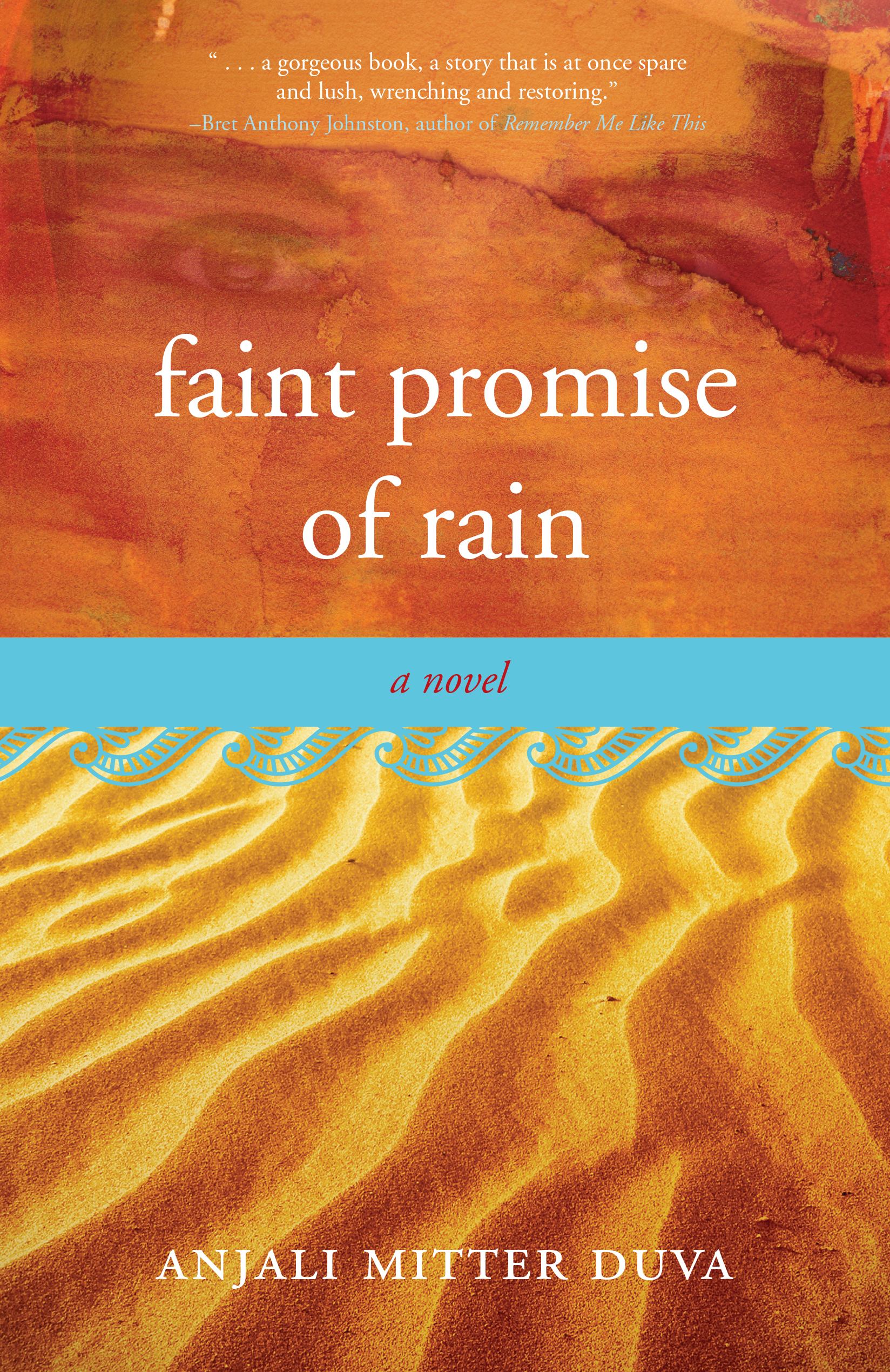
But how does one untangle India’s deep, long history of treating women as both sacred and profane? Of venerating female deities—among them Saraswati, goddess of knowledge, music, arts and science whose annual celebration, Saraswati Puja, was just two days ago—while denying some female children education? Of worshiping one’s own mother while copping a feel at someone else’s in the street? Of viewing female temple dancers as auspicious vessels of the divine, yet paying those temples for their more carnal services, as experienced by the central character in Faint Promise of Rain?

Perhaps one doesn’t untangle. One just acts. One takes what is good, and beautiful, and strong, and just, and one spreads it as best one can until it pushes out the rest. In a reversal of the last juxtaposition mentioned above, the New Light Foundation in Kolkata is working with (among others) the children of sex workers to empower them to find opportunities for themselves beyond the world their mothers have inhabited, and has included kathak dance classes as a means toward this empowerment. Kathak, the very dance that originated in those Hindu temples many hundreds of years ago. Pandit Chitresh Das, master kathak dancer and teacher, and the Kolkata branch of his school, has been involved with New Light:

Five years after this clip was shot, another was made with girls from New Light dancing, on the occasion of One Billion Rising. (Thanks to my mother Sara Mitter, author of Dharma’s Daughters who has worked with the New Light founder, Urmi Basu, for calling this to my attention.)

The videos speak for themselves. There are changes to be made. There are changes being made. So yes, I say to my friend. Absolutely. Go to India.

Ancient Jain temple inside Jaisalmer. Photo by Sangeeta Dhanuka (Wikimedia Commons)

Ancient Jain temple inside Jaisalmer. Photo by Sangeeta Dhanuka (Wikimedia Commons)

In Rajasthan, a five year old child is likely never to have seen rain. For centuries, the monsoons have been elusive, and it was no different when I was young. So it is understandable that when I was born during the first rainstorm in so long, some considered me special. In the royal palace of the citadel not far from our home, the walls of children’s rooms were, and are still, trimmed with black and blue cloud designs, so when the gods finally did send rain, the little ones would not be afraid. But for others such as my brothers and sister, who grew up looking at thatched roofs and endlessly blue skies, the day of their first rain can mean an intensity of both fear and hope.

I have no doubt that I now possess an unusual gift, but it came late in my life. I began as all children do, accepting of my lot for it was the only one I knew, and living by the decisions my father made for me. When I was old enough, I began to understand that I could shape my own path. And although I struggled greatly along the way, the gods must have approved of what I chose to do with it, for many, many years later they gave me this gift. I am not sure why they acted as they did, or how they chose what knowledge to grant me and what to keep concealed. Was it a moment of selfishness on their part? Was it for our dance? For humankind? Or, possibly, just for me? Whatever the reason, knowing now the minds and hearts of some of those close to me when I was a child allows me to tell this story. It is not the story of me alone, but mine alone to tell.

www.faintpromiseofrain.com

%d bloggers like this: